
Cuisinart Coffee Maker Water Filter Review: Is It Worth It?
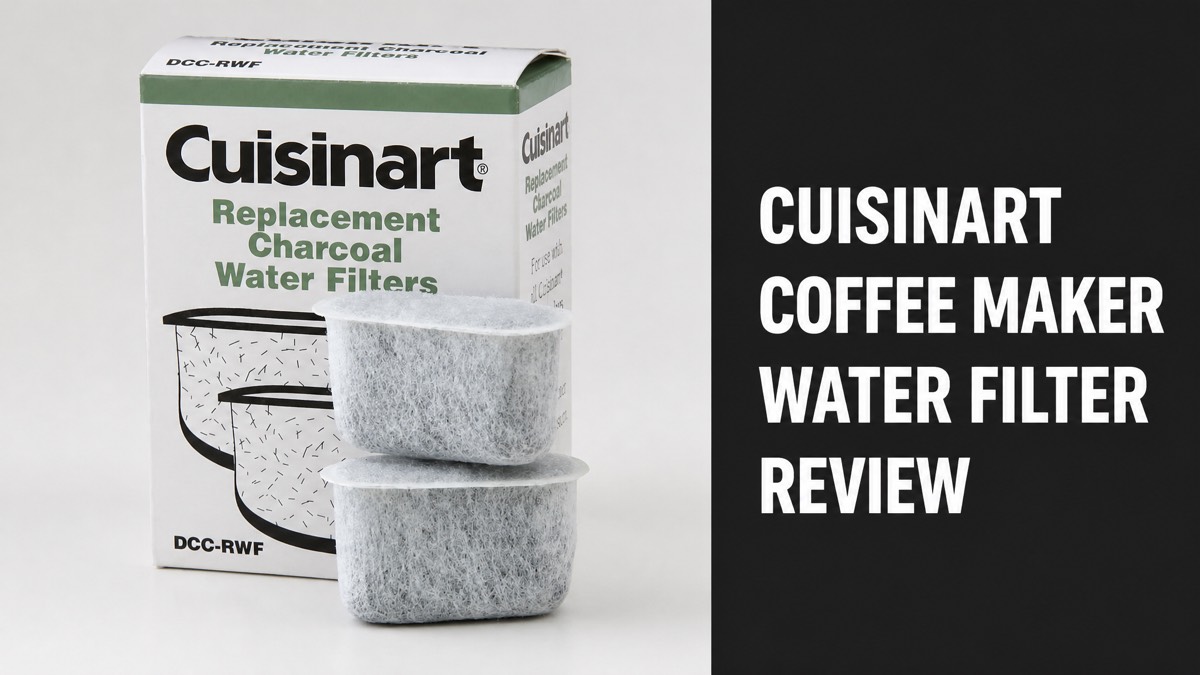
The Cuisinart coffee maker water filter is the DCC-RWF, a small charcoal cartridge that sits in the reservoir of Cuisinart brewers. Cuisinart makes one filter model for every charcoal-filter machine. The cartridge cleans tap water before brewing starts, and a 12-filter pack costs well under a dollar per filter.
The filter removes chlorine and odor, so the cup tastes cleaner. Plain carbon does not soften hard water, so descaling stays on the calendar. Installation takes about 30 seconds after a quick rinse. The manual sets replacement at 60 days or 60 uses. Buyers rate multipacks around 4.8 stars, and the most common praise covers fit, taste, and value for money.
Generic packs match the original at roughly $0.62 per filter. The weak points are the missing life indicator and uneven fit on third-party packs. Read on for the install steps, the Brita comparison, and a straight verdict on who gains the most from the filter and who can safely skip it.
What Is a Cuisinart Coffee Maker Water Filter?
The Cuisinart coffee maker water filter is a small charcoal cartridge, sold as the DCC-RWF, that sits in the reservoir of a Cuisinart coffee maker. The cartridge cleans tap water before the water reaches the grounds.
Cuisinart makes just one filter model for every machine with a charcoal filtration system. Why does that matter? The same DCC-RWF replaces the cartridge in older and newer brewers alike.
In plain English: the filter targets chlorine, bad taste, and odor. Cleaner water lets the coffee carry its own aroma instead of the tap's.
To be clear, buyers find the filter in 2-packs and in 6-packs that hold 12 filters. A 12-filter box covers about two years of daily brewing.
The filter body is a compact oval cartridge. A 2-pack weighs 8.2 ounces (232 grams), so a box slips easily into a drawer next to the machine.
Which Cuisinart Coffee Makers Use It?
The DCC-RWF fits every Cuisinart coffee maker that has a charcoal filtration system. The supported list includes the DCC-900, DCC-1000, DCC-1200, DGB-500, and DGB-600.
Supported Models:
- DCC-900
- DCC-1000
- DCC-1200
- DGB-500
- DGB-600
A missing model number doesn't signal a bad fit. Why not? Cuisinart doesn't document every machine, and the same filter works in the undocumented ones.
Here's the part most people miss: the filter holder is a separate part. Replacement holders such as the DCC-1200WFH and the DGB-500BKFH sell on their own.
Keurig machines use a different filter design. Cuisinart-compatible packs carry a clear not-for-Keurig label.
Single-serve Cuisinart models with charcoal filtration use the same part. Owners of the SS-10 and DCC-3000 families buy the same DCC-RWF as owners of drip brewers.
How Does the Cuisinart Water Filter Work?
The filter cleans water through activated coconut charcoal that adsorbs impurities onto its surface. Millions of tiny pores trap chlorine and odor compounds as water flows through.
Think of it this way: water passes through the cartridge before it reaches the brew basket. The grounds then meet water that is already stripped of its harshest flavors.
Carbon has a limited working life. What does that mean in practice? The media saturates gradually, so performance fades slowly instead of stopping overnight.
Carbon cannot filter forever. Heavy brewing uses the capacity faster, and a cartridge that sits in standing water ages even when the machine rests.
Does It Remove Chlorine and Odors?
Yes. Activated carbon removes chlorine and odor compounds, the two flavors tap water most often adds to coffee. Chlorine is the biggest culprit behind a flat or metallic cup.
The Specialty Coffee Association recommends 0 mg/L of chlorine in brew water. A fresh charcoal cartridge moves a chlorinated tap supply toward that target.
Owners describe a cleaner cup with less metallic edge. The change is subtle but real, and it's easiest to notice with a fresh filter.
The benefit grows with chlorine levels. Tap water with a strong pool-like smell shows the biggest before-and-after difference.
Does It Soften Hard Water?
No. Plain charcoal does not meaningfully remove calcium and magnesium, the minerals behind limescale. A retail listing mentions calcium reduction, but a basic carbon cartridge leaves most hardness in place.
Hard-water homes still need regular descaling. Why? The filter improves taste, and descaling handles mineral deposits.
Scale buildup inside narrow heating passages is a mineral problem. Carbon addresses flavor, so the descaling routine stays on the calendar.
And here's the kicker: activated carbon also skips heavy metals and bacteria. A cartridge in a coffee maker is a taste component, not a purification system.
Not Removed by Plain Carbon:
- Calcium and magnesium
- Heavy metals
- Bacteria
How Do You Install and Replace It?
Installation takes about 30 seconds and needs no tools. Four short steps cover the whole job.
First, open the reservoir lid and locate the black plastic filter holder. The holder snaps open, and the used cartridge lifts out.
Seat the rinsed filter in the holder and snap the holder shut. Place the holder back into its recess, parallel to the reservoir wall.
Install Steps:
- Open the reservoir lid and find the black filter holder.
- Snap the holder open and lift out the used cartridge.
- Rinse the new filter under cold running water.
- Seat the filter in the holder and snap the holder shut.
- Place the holder back into its recess in the reservoir.
A cartridge that sits crooked lets water slip past the carbon. Press the holder in until it clicks and sits flat.
Why Rinse a New Filter First?
Rinsing flushes loose carbon dust out of a new cartridge. A dry filter drops fines into the reservoir and tints the first brew.
The manual calls for about 10 seconds under cold running tap water. Some filter guides soak the cartridge for 2 to 5 minutes and then flush for 60 seconds.
Small black specks in the water mean the rinse was too short. What's the fix? Pull the filter, rinse for 30 seconds, and reinstall.
The specks are loose carbon, not a defect. A longer rinse removes them before the next brew.
How Often Should You Change It?
The manual sets replacement at every 60 days or 60 uses, whichever comes first. Light users sometimes stretch a cartridge to 3 to 6 months.
Cartridge life depends on water quality and brew volume. Higher chlorine levels exhaust the carbon sooner.
A busy household that brews twice a day reaches 60 uses in about a month. A single-cup drinker reaches the 60-day mark first.
Replacement Schedule:
| Usage | Interval |
|---|---|
| Manual guidance | 60 days or 60 uses |
| Busy household | About 1 month |
| Light user | 3 to 6 months |
The filter has no life indicator. So how do you know it's spent? An off taste, a musty smell, or a slower flow signals a spent cartridge.
A chlorine test kit gives a firmer answer than taste. Aquarium and drinking-water kits cost about 50 cents each.
What Do Buyers Say About It?
Buyers rate Cuisinart-compatible charcoal filters around 4.8 stars. One 12-pack carries more than 3,550 reviews at that score.
Three themes repeat: quality, value for money, and fit. Customers note that generic packs perform like the name brand.
Delivery speed and packaging draw small notes too. Charcoal filters ship individually wrapped, which keeps the cartridges clean in transit.
What Do Buyers Like?
Buyers praise the easy fit, the cleaner taste, and the low price per filter. Several say the cartridge dropped into a Cuisinart machine on the first try.
Multipacks win on cost. A 12-pack beats buying a 2-pack every two months.
Fit earns steady credit. Customers with single-cup Cuisinart models report the same easy drop-in result as drip-machine owners.
What Are the Common Complaints?
Buyers mention size, fit, and the missing life indicator most often. Some find the cartridges slightly small, while others call the size perfect.
Look, a loose cartridge lets water bypass the carbon or leak around the holder. Checking the seating avoids the problem.
Without an indicator, replacement runs on a calendar. What's the easy fix? A date written on the reservoir lid does the job.
How Do Cuisinart Filters Compare to Alternatives?
The main alternative is a filter pitcher such as the Brita 10-cup model, which treats water for everything. The pitcher costs $31.44 and needs a manual refill.
A standard Brita filter lasts about 40 gallons or two months. The Longlast version stretches to 120 gallons or six months.
Both options use activated carbon, and neither softens water. The Cuisinart cartridge wins on convenience. Why? Every pot brews with filtered water automatically.
Cost per gallon favors the in-machine cartridge. A pitcher pays off when drinking water matters as much as coffee.
Cuisinart Cartridge vs Brita Pitcher:
| Feature | Cuisinart Cartridge | Brita Pitcher |
|---|---|---|
| Water treated | Coffee maker only | Drinking, cooking, coffee |
| Price | $0.62 per filter in a 24-pack | $31.44 per pitcher |
| Filter life | 60 days or 60 uses | 40 gallons or 2 months |
| Softens water | No | No |
Are Generic Packs as Good as the Original?
Yes. Generic packs deliver the same charcoal filtration at a lower price per filter. Buyers say they perform as well as the name brand.
The good news? One 24-pack costs $14.99, which works out to $0.62 per filter. A 12-pack from Pureline lists NSF-42 certification.
The one risk is fit. Confirm the cartridge seats firmly before relying on it.
A third-party cartridge that fits loosely invites leaks. A tight fit and a clean seal matter more than the brand name on the box.
How Much Does It Cost?
The Cuisinart water filter costs well under a dollar per filter in multipacks. A 24-pack runs $14.99, or $0.62 per filter.
A 12-filter pack supplies roughly two years of 60-day changes. The yearly cost stays low even at brand prices.
Authentic Cuisinart 2-packs cost more per filter. Multipack buyers save the most.
Replacement holders add a one-time expense. A cracked holder costs far more than the filters it holds, so handle the holder gently during swaps.
Where Can You Buy It?
The filter sells at Amazon, Walmart, Best Buy, Wayfair, and eBay. Each carries 2-packs and larger multipacks.
Specialty filter shops and Costco stock authentic Cuisinart packs. Match the DCC-RWF part number before ordering.
Where to Find It:
- Amazon
- Walmart
- Best Buy
- Wayfair
- eBay
Is the Cuisinart Water Filter Worth It?
Yes. The filter is worth it for anyone who brews with chlorinated tap water. The cost is small, the install is easy, and the taste gain is real.
The weak points are narrow. The filter does not control hardness, and no indicator tells when it is spent.
Pros:
- Low cost per filter
- Tool-free install
- Cleaner taste on chlorinated tap water
Cons:
- No control over water hardness
- No life indicator
- Fit varies on third-party packs
So what's the verdict? Buy a multipack, mark the change date, and descale on schedule.
Frequent brewers on chlorinated tap water gain the most. A sub-dollar cartridge every two months is a small price for a cleaner pot.
Who Can Skip It?
Homes with reverse osmosis water gain little from an extra carbon stage. Water that is already treated leaves the cartridge nothing to remove.
Tap water that tastes clean needs no filter either. How do you know? A side-by-side taste test settles the question.
Occasional brewers get marginal value. Standing water and an aging cartridge add upkeep without a clear taste payoff.
Pop Kitchen is a reader-supported platform. Purchases made through our links may earn us an affiliate commission at no extra cost to you.