
Doulton Water Filter Review: Is It Worth It?
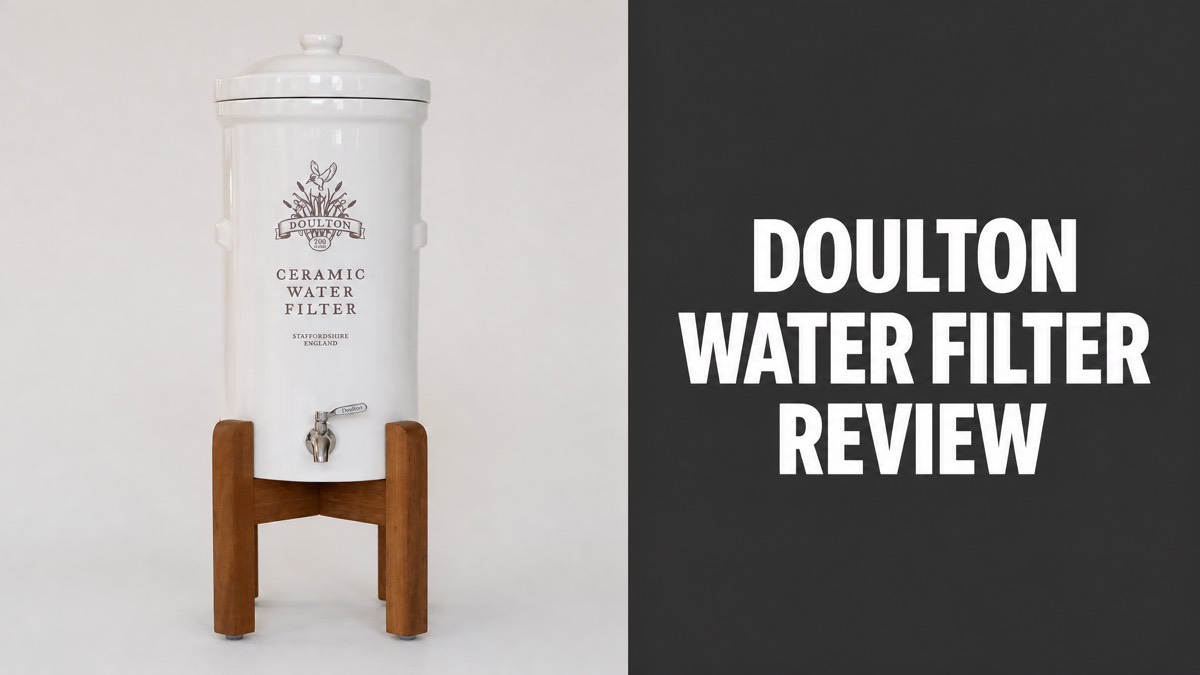
A Doulton water filter is a ceramic-candle drinking water system from a UK specialist in Stoke-on-Trent, England. The brand sells countertop, under-sink, inline, and gravity-fed stainless units, and its ceramic filter line dates back to an 1862 royal commission for Windsor Castle.
Candles share housings but differ in certified scope. Doulton holds 31 NSF listings, and Ultracarb is certified for lead. No model is certified for fluoride or PFAS. Candles outlast pitcher cartridges by a wide margin, but they cost more each year, flow stays slow, and cleaning is a routine. Berkey holds no NSF listing.
Doulton beats Berkey on third-party proof and beats pitchers on candle life. The cleaning routine, the hardware complaints, and the price premium all matter too. Read on for the candle differences, the real yearly costs, the contaminant gaps, and who needs a different filter before buying.
What Is a Doulton Water Filter?
A Doulton water filter is a ceramic-candle filtration system from a UK specialist, sold as countertop, under-sink, inline, and gravity-fed stainless units. The candle does the filtering. The housing only holds the candle and sets how water moves through it.
The Doulton name traces to Royal Doulton's 1827 founding in Lambeth, London. Queen Victoria commissioned Henry Doulton to develop ceramic water filters for Windsor Castle in 1862. The commission began roughly 165 years of continuous ceramic filter making.
The lineup covers four candle types (Ultracarb, Sterasyl, Supercarb, and Biotect Ultra) plus the British Berkefeld stainless gravity housing. Candles share housings, so buyers choose the candle first and the housing second.
Buyer ratings run high. So how high? Doulton Water Filters Ltd holds about 4.5 out of 5 stars on Trustpilot, and Amazon candle listings add roughly 2,000 reviews at the same 4.5-star average.
Where Are Doulton Filters Made?
Doulton candles are made in Stoke-on-Trent, England, by Fairey Industrial Ceramics Ltd. The factory sits in the historic Staffordshire pottery district. Candles are formulated, fired, assembled, and NSF-tested there.
US buyers order through Doulton USA, Amazon, and other retailers. But UK manufacturing with US distribution can stretch lead times on replacement candles. Doulton USA stocks US inventory to offset that, though availability of a given model varies.
The water filter business operates separately from Royal Doulton tableware. The tableware line was sold to Waterford Wedgwood in 2005, while the filter line stayed with the ceramics maker in Stoke-on-Trent.
How Does a Doulton Water Filter Work?
A Doulton filter pushes tap water through a fired, porous ceramic candle that traps particles, cysts, and bacteria on its surface. The Sterasyl candle has pores of about 0.5 micron. Gravity or line pressure moves the water through the wall.
Carbon-based candles add more stages. Ultracarb layers a carbon block, lead-reduction media, and a silver bacteriostat under the ceramic shell. The carbon stage cuts chlorine and taste and odor. The silver inhibits bacterial growth in the ceramic.
Ceramic filtration leaves dissolved minerals in the water. Why does that matter? A ceramic filter is not built to remove them, so an unchanged total dissolved solids (TDS) meter reading after filtering is the expected result, not a faulty filter.
Flow stays slow by design. The Ultracarb runs at about 0.5 gallons per minute (1.9 liters per minute), and gravity housings deliver roughly 1-2 gallons per hour (3.8-7.6 liters per hour). To put it simply: that pace suits drinking water, not whole-house supply.
What Is the Difference Between Ultracarb, Sterasyl, and Supercarb?
The three candles share the same housings but carry different certified scopes. Ultracarb is the broadest, Sterasyl is ceramic only, and Supercarb targets chlorine and taste. The housing tells a buyer nothing, because the candle is what NSF certifies.
Ultracarb combines ceramic, a carbon block, lead-reduction media, and silver. NSF lists it for chlorine, particulates, taste and odor, lead, cysts, and turbidity. Sterasyl is ceramic with silver and has no lead claim, because it skips the lead stage.
Candle Comparison:
| Candle | Certified For | Lead Claim | Price Each |
|---|---|---|---|
| Ultracarb | Chlorine, particulates, taste and odor, lead, cysts, turbidity | Yes | $55-$85 |
| Sterasyl | Particulates, cysts, turbidity | No | $45-$70 |
| Supercarb | Chlorine and taste and odor only | No | $50-$80 |
| Biotect Ultra | Chlorine, particulates, taste and odor, lead, cysts, turbidity ([Pb] variants) | Yes, [Pb] only | $70-$110 |
Now, Supercarb is the carbon-enhanced candle for chlorine and taste. Households with a chlorine taste complaint, but no lead or cyst concern, fit it best. The candle carries no NSF/ANSI 53 health claim.
Biotect Ultra is the higher-capacity refinement of the Ultracarb base. Does the model name tell you what is certified? No. The suffix does: only [Pb] variants carry NSF/ANSI 53 lead coverage, while unsuffixed inline versions add microplastics certification instead.
What Does a Doulton Water Filter Remove?
A Doulton filter removes sediment, cysts, bacteria, chlorine, and lead, with the scope set by the candle. Certified claims differ by candle, so the NSF listing for the specific candle sets the real scope. Marketing copy often claims more.
Ultracarb tops the lineup. NSF lists it for chlorine, particulates, taste and odor, lead, cysts, and turbidity. A buyer with a bacteria or cyst concern on well or surface water gets coverage from a Sterasyl candle as well.
Ceramic micron ratings invite overreach. Packaging sometimes implies that the filter removes 99% of all contaminants. The bottom line: stick with what the NSF/ANSI 42, 53, and 401 listings actually cover.
Is a Doulton Filter NSF Certified?
Yes. Doulton holds 31 certified listings in the NSF directory under the name Doulton Water Filters. The listings span NSF/ANSI 42, 53, and 401. Few ceramic filter brands match that depth of third-party testing.
The three standards cover different jobs. NSF/ANSI 42 covers chlorine, particulates, and taste and odor. NSF/ANSI 53 covers lead, cysts, and turbidity. NSF/ANSI 401 covers microplastics on the base variants.
Standards Held:
- NSF/ANSI 42: chlorine, particulates, taste and odor
- NSF/ANSI 53: lead, cysts, turbidity
- NSF/ANSI 401: microplastics on base variants
NSF lists the brand as Doulton Water Filters, not the Royal Doulton tableware name. Why does the spelling matter? Buyers searching the database need that name, and checking the specific candle model confirms its scope.
Does a Doulton Filter Remove Lead?
Yes. The Ultracarb candle is NSF/ANSI 53 certified for lead reduction. Biotect Ultra variants with the [Pb] suffix carry the same lead coverage. The Sterasyl and Supercarb candles carry no lead claim.
The [Pb] suffix on inline models marks the lead-reduction media. Does every Doulton candle cover lead? No. A buyer who wants certified lead reduction must pick a [Pb] variant or an Ultracarb candle, because picking by housing alone risks a candle without lead coverage.
Paid laboratory results from an Ultracarb setup on municipal water came back about as good as a filtered sample realistically gets. Those results are the strongest single piece of owner evidence for the brand.
Does a Doulton Filter Remove Fluoride or PFAS?
No. No Doulton model carries a third-party certification for fluoride or PFAS removal. The ceramic candle lineup does not meaningfully reduce fluoride. Reverse osmosis is the right format for that job.
The same gap applies to several other contaminants. No Doulton listing covers PFOA and PFOS, arsenic, nitrate, or chromium-6. The composite media can reduce some of them incidentally, but those claims are not on any certification.
Not Certified For:
- Fluoride
- PFOA and PFOS
- Arsenic
- Nitrate
- Chromium-6
Buyers who need certified PFAS reduction have options. AquaTru Classic and Brondell Capella are the certified cross-shop picks. For certified fluoride or nitrate removal, a reverse osmosis system is the step up.
What Are the Pros and Cons of a Doulton Water Filter?
A Doulton filter trades higher upfront and replacement costs for deep third-party certification and long candle life. The strengths center on testing, minerals, and cleanability. The weaknesses center on contaminant gaps, slow flow, and ongoing costs.
Taste draws steady praise from long-term users. But complaints cluster around plastic taps, delivery, and cleaning discipline. Gravity ceramic units hold standing water, so a cleaning routine is part of ownership.
What Do Owners Like About Doulton Filters?
Owners value third-party certification, mineral retention, long candle life, and a cleanable ceramic shell. Taste earns steady praise. Doulton filters keep natural minerals in the water, unlike reverse osmosis.
Candle life beats pitchers by a wide margin. How wide? An Ultracarb candle lasts about 6,000 gallons (22,700 liters), or 6 to 12 months of typical use, while a Brita Elite cartridge lasts about 120 gallons (454 liters).
Scrubbing restores flow. In fact, a gentle brush under running water removes the sediment layer from the ceramic surface. Polymer cartridges have no such option and must be replaced when flow drops.
Compatibility adds flexibility. Doulton candles install in Berkey-style stainless gravity housings with adapter kits. Owners moving away from Berkey keep their existing housing and gain certified candles.
Pros:
- Third-party NSF certification
- Natural minerals stay in the water
- Candle life of 6 to 12 months
- Scrubbable ceramic shell
- Fits Berkey-style housings with adapter kits
What Do Owners Complain About?
The most common complaints involve ongoing replacement cost, contaminant gaps, slow flow, and mixed hardware quality. Ultracarb and Biotect Ultra candles cost $55-$170 per year. A Brita Elite costs about $30-$50 per year.
Hardware draws the sharpest criticism. Some buyers report flimsy or leaking plastic taps on countertop units. Others report shipping problems and slow support replies.
Standing water creates a maintenance duty. Why? Gravity ceramic systems hold water at room temperature, so musty taste and white deposits can appear when cleaning lapses. Planning cleaning and storage up front avoids the problem.
Replacement candles arrive slower than US-made options. Doulton makes them in England and distributes through Doulton USA. Stock of a specific model varies.
Cons:
- Higher yearly replacement cost than pitchers
- No certified fluoride, PFAS, or nitrate removal
- Slow flow rate
- Leaking plastic taps on some countertop units
- Longer lead times on replacement candles
How Does Doulton Compare With Berkey and Brita?
Doulton competes with Berkey on certification and with Brita on cartridge life. Berkey sells the same gravity stainless format with its own laboratory reports. Brita sells low-cost pitcher cartridges. Each comparison turns on a different strength.
Doulton costs more than a pitcher and about the same as a Berkey. So what does that mean for you? The choice depends on the format a household wants, the contaminants it needs removed, and what it will spend on replacements each year.
Doulton vs Berkey: Which Is Better?
Doulton holds NSF certification that Berkey lacks. The NSF, IAPMO, and WQA directories list no Berkey performance certification. Berkey relies on its own ISO 17025 laboratory reports from CVR Labs and RAYNU Analytical Labs instead.
Format and price run close. The British Berkefeld SS2 costs about $280-$450 with a candle. The Big Berkey (2.25 gallons, 8.5 liters) with two Black Berkey elements costs about $390-$450.
Doulton vs Berkey:
| Feature | British Berkefeld SS2 | Big Berkey |
|---|---|---|
| Format | Gravity stainless countertop | Gravity stainless countertop |
| Price | $280-$450 | $390-$450 |
| Third-party certification | NSF/ANSI 42, 53, 401 | None listed |
| Candle life | About 6,000 gallons (Ultracarb) | About 6,000 gallons (pair) |
Capacity matches as well. Ultracarb candles last about 6,000 gallons (22,700 liters), and a pair of Black Berkey elements also lasts about 6,000 gallons. Sterasyl lasts about 1,500 gallons (5,700 liters).
Compatibility runs one way. Can a Black Berkey element go into a Doulton housing? No. Doulton candles fit Berkey-style stainless housings with adapter kits, but Black Berkey elements do not fit Doulton housings.
Doulton vs Brita: Which Is Cheaper?
Brita wins on upfront price, while Doulton wins on certified scope and candle life. A pitcher and one cartridge cost about $45-$65 together. A Doulton housing kit costs $150-$280, plus $55-$85 for the candle.
Cartridge life is the gap. How big is it? A Brita Elite cartridge lasts about 120 gallons (454 liters), a PUR Classic about 40 gallons (151 liters), and an Ultracarb candle about 6,000 gallons (22,700 liters).
Yearly cost still favors the pitcher. Brita Elite runs about $30-$50 per year, and PUR Classic about $15-$25. Ultracarb and Biotect Ultra candles run $55-$170 per year. Both brands hold NSF listings, so certification is no tiebreaker.
How Much Does a Doulton Water Filter Cost?
A Doulton system costs $45-$450 depending on the model, plus $55-$110 per candle each year. Candles run $45-$110 each. Housing kits run $90-$450, with the stainless gravity kits at the top of that range.
Typical Prices:
| Item | Typical Price |
|---|---|
| Sterasyl candle | $45-$70 |
| Supercarb candle | $50-$80 |
| Ultracarb candle | $55-$85 |
| Biotect Ultra candle | $70-$110 |
| Inline housing kit | $90-$220 |
| British Berkefeld SS2 kit with candle | $280-$450 |
Doulton sits in the premium tier of ceramic filtration. In plain English: budget buyers seeking the cheapest certified filtration find pitcher cartridges cheaper. The premium buys certification depth and long candle life.
How Long Do Doulton Candles Last?
An Ultracarb candle lasts about 6,000 gallons (22,700 liters), or 6 to 12 months of typical use. Other candles differ. Sterasyl lasts about 1,500 gallons (5,700 liters). The sediment load in the feed water shifts both figures.
Sediment load drives the interval. Muddy or well water clogs the ceramic surface faster, so flow slows sooner. Scrubbing restores flow, but candles still need replacing on schedule.
Tracking replacement dates matters. What happens when a candle stays in too long? Impurities get through, and the ceramic surface wears thinner with every scrub.
How Do You Clean a Doulton Filter?
Cleaning means gently scrubbing the ceramic candle under running water until the surface looks white again. Owners clean roughly every 30 days to get a year or more from a candle. A soft scrub pad or brush does the job.
Now, skip soap and detergent. Heavy rubbing removes more ceramic than needed, which shortens candle life. Rubber gloves protect the clean surface, and the plastic mount must not touch unfiltered water.
Housing care matters too. Unscrew the body from the head, then wipe the inside with a soft cloth and warm water. Leave the top of the filter head alone, since cleaning there contaminates filtered water.
Cleaning Steps:
- Unscrew the body from the head.
- Scrub the ceramic candle gently under running water until it looks white again.
- Wipe the inside of the body with a soft cloth and warm water.
- Leave the top of the filter head alone.
Is a Doulton Water Filter Worth It?
Yes. A Doulton filter is worth it for buyers who want certified lead, cyst, and chlorine reduction with minerals left intact. A Doulton filter is not worth it for buyers who need fluoride, PFAS, or nitrate removal.
Bottom line: the price premium buys third-party proof and a candle that lasts 6 to 12 months. The slow flow, the cleaning routine, and the hardware complaints are the trade-offs.
Who Should Skip a Doulton Water Filter?
Doulton is the wrong pick for fluoride, PFAS, arsenic, nitrate, and chromium-6 concerns. No certified Doulton model covers them. Reverse osmosis, or a filter with the specific NSF/ANSI 53 listing, fits those needs.
High-volume households also fit poorly. Ceramic candle flow is low, at about 0.5 gallons per minute (1.9 liters per minute) for Ultracarb. A large family filling many bottles waits through that slow flow.
Budget shoppers pay more. A Doulton system runs $45-$450 plus $55-$110 per candle each year. Buyers who want the cheapest certified option find pitcher cartridges cheaper.
Pop Kitchen is a reader-supported platform. Purchases made through our links may earn us an affiliate commission at no extra cost to you.